Modhera Sun Temple : Where the brilliance of the sun glows in the brilliance of architecture
Author: Mrs. Dimple (Manisha) Sonigra
Issue: MAR-APR 2026
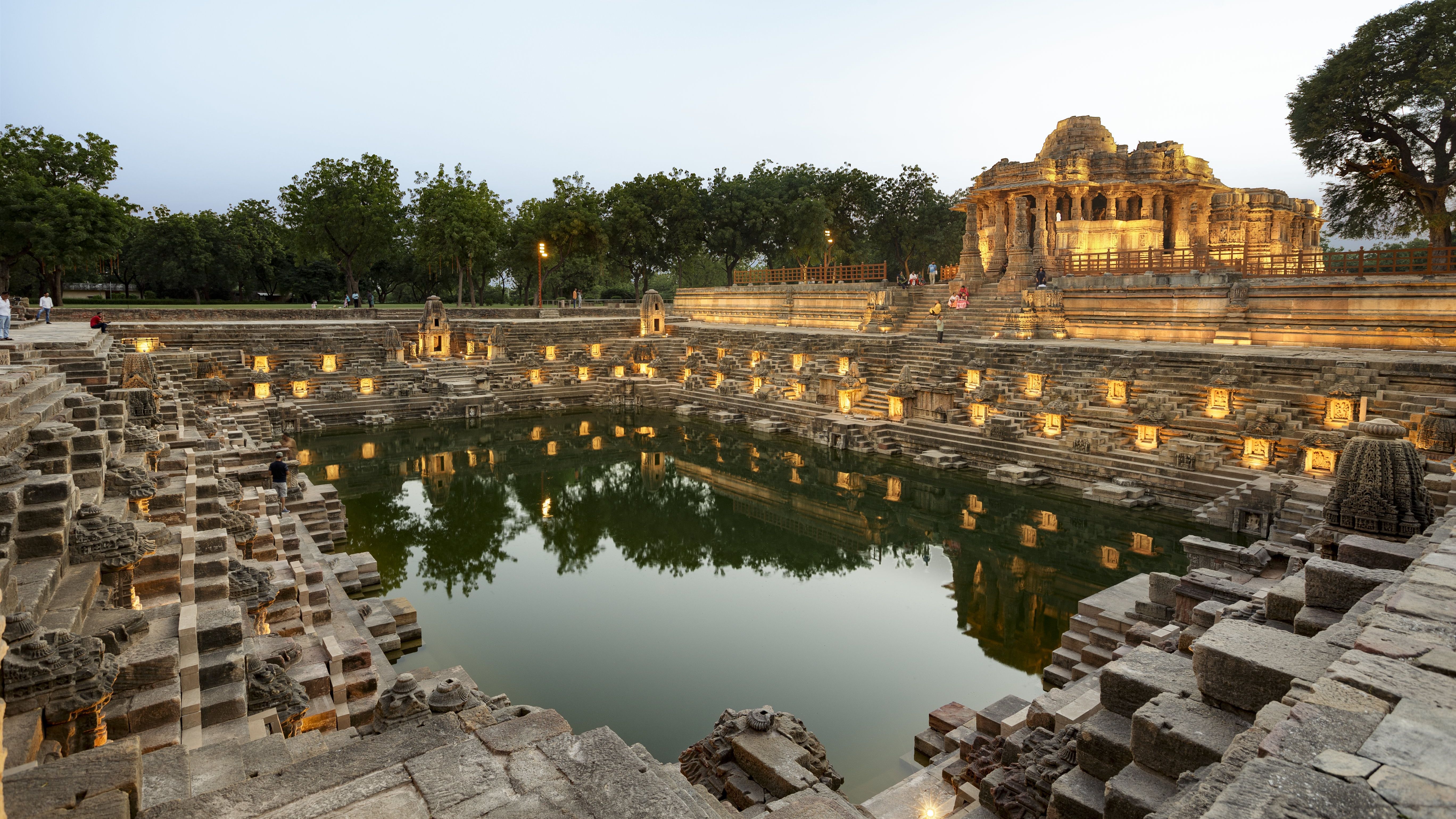
Modhera Sun Temple in Gujarat is dedicated to Surya Devta, the Hindu Deity.
It symbolizes the worship of the sun in early Hinduism. Since the Vedic period the sun has signified the divine light which removes darkness and illuminates one’s life with spiritual awakening. The Vedic Surya Mantra invokes Surya Devta for health and prosperity as follows:
ॐ नमः सूर्याय शान्ताय सर्वरोगविनाशने
आयुः आरोग्यम् ऐश्वर्यं देहि देव जगत्पते ! ।।
Om Namah Suryaaya Shaantaaya
Sarva-roga–Vinaashane
Aayuh Aarogyam Aishwaryam
Dehi Deva–Jagatpate.
Salute to the Lord Sun who is peaceful and can remove all diseases.
O the Lord of World! please give me longevity, sound health and prosperity.
Following this tradition of Sun-worship in India, the Modhera Sun Temple was constructed during the reign of Bhima I of the Chalukya Dynasty (the Suryavanshi Solankis) after 1026-27 CE. It is located in the Mehsana district of Gujarat on the bank of River Pushpavati on 23.6° North latitude (approximately near the Tropic of Cancer). What makes this site even more remarkable is the brilliance of its architectural design.
The Garbhagriha has been positioned so precisely that on the days of the solar equinox, the very first rays of the rising Sun travel straight, lighting up its innermost core. This reveals a powerful symbol of life and illumination. Although the idol of the Sun God is no longer present, the play of light still bears silent witness to the vision and skill of the temple’s creators. Also, on 21st June, the summer solstice, the Sun casts no shadow at noon as it shines directly above the temple.
The Sanctum (Garbhagriha) is enclosed within a hall called Gudhamandapa and there is an outer assembly hall called Sabhamandapa or Rangamandapa. Carved here on twelve different pillars are the sculptures of twelve Adityas, another name for Surya Devta, representing the position of the Sun according to the twelve months.
Located in front of the temple is a magnificent kund called Suryakund. Rectangular in shape, it contains 108 shrines of different gods and demi-gods. On the three sides of the kund are three main shrines dedicated to Vishnu, Ganesh and Shiva dancing the tandav.
The temple walls are also adorned with beautifully carved figures of Vishwakarma, Saraswati and Ganesha, symbolising creation, knowledge, and wisdom. Alongside them stand the Ashtadikpalas—the divine guardians of the eight directions—Indra, Varuna, Agni, Yama, Nirrti, Kubera, Vayu, and Ishan, each watchfully protecting the sacred space from every side. A Pradakshinapatha (circumambulatory passage) is created between the Garbhagriha and the Gudhamandapa.
Since 1992, at the temple complex, Gujarat Tourism Corporation organizes a three-day dance festival each year during the third week of January after the festival of Uttarayan. Various dance forms of ancient and contemporary India are performed here such as Kuchipudi, Bharatnatyam, Kathak and so on.
But the main highlight is the Garba performance depicting the glorious culture of Gujarat. The Modhera Dance Festival reflects the Gujarat Government’s Cultural Department’s commitment to preserving and celebrating India’s rich traditions and cultural heritage, ensuring they remain alive for future generations.
Adding a charm to this popular Sun Temple, Honorable Prime Minister of India, Shri. Narendra Modi has inaugurated a solar powered 3D Projection Show with Heritage Lighting in October 2022. The temple is no longer used for worship. But it is a protected monument which is maintained by the Archaeological survey of India. In December 2022, it was added to the ‘tentative list of the UNESCO World Heritage Committee’. The magnificent Modhera Sun Temple stands as a source of pride not only for Gujarat but for the entire nation, representing an enduring architectural heritage of India.